The Ultimate Plate Guide: What to Eat When Everything Seems Forbidden
Introduction
If you’ve ever searched online for healthy eating advice, you’ve probably come away more confused than before. One article tells you to avoid carbohydrates, another warns against fats, while someone else insists that fruit contains too much sugar. Add concerns about gluten, dairy, processed foods, and calories, and it can feel like almost everything is off-limits.
The good news? Healthy eating doesn’t have to be complicated. Instead of focusing on what you can’t eat, it’s more helpful to build a balanced plate that provides your body with the nutrients it needs.
This guide will help you understand how to create nutritious meals, no matter your dietary preferences or health goals.
Why Diet Confusion Exists
Nutrition advice changes as new research emerges, and social media often amplifies extreme viewpoints. Many popular diets remove entire food groups, making healthy eating seem restrictive.
Common examples include:
- Low-carb diets
- Keto diets
- Gluten-free diets
- Dairy-free diets
- Paleo diets
- Intermittent fasting
While some of these approaches may benefit certain individuals, there is no single eating pattern that works for everyone.
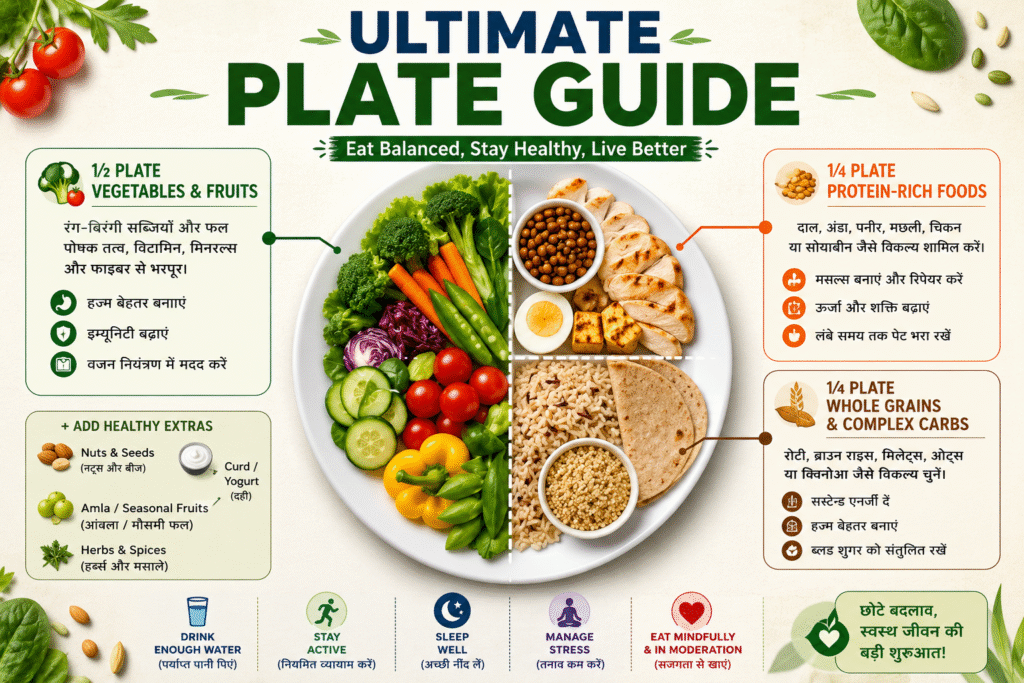
The Balanced Plate Method
Rather than counting every calorie, many nutrition experts recommend using the balanced plate method.
Imagine your plate divided into sections:
Half Your Plate: Vegetables and Fruits
These foods provide:
- Vitamins
- Minerals
- Fiber
- Antioxidants
- Water
Choose a variety of colorful vegetables like spinach, broccoli, carrots, tomatoes, cucumbers, bell peppers, cabbage, and seasonal produce.
One-Quarter: Protein
Protein helps build and repair muscles, supports immunity, and keeps you feeling full.
Healthy protein choices include:
- Lentils
- Beans
- Chickpeas
- Eggs
- Fish
- Chicken
- Tofu
- Paneer
- Greek yogurt
One-Quarter: Whole Grains or Healthy Carbohydrates
Carbohydrates are your body’s primary source of energy.
Choose healthier options such as:
- Brown rice
- Whole wheat roti
- Oats
- Quinoa
- Millets
- Sweet potatoes
Avoid assuming that all carbohydrates are unhealthy. The quality of carbohydrates matters more than eliminating them entirely.
Don’t Fear Healthy Fats
Healthy fats are essential for hormone production, brain function, and heart health.
Good sources include:
- Nuts
- Seeds
- Avocados
- Olive oil
- Mustard oil
- Groundnut oil (in moderation)
Limit trans fats and highly processed fried foods instead of avoiding fats altogether.
Hydration Matters
Water is often overlooked but plays a critical role in:
- Digestion
- Temperature regulation
- Nutrient transport
- Energy levels
Aim to drink water regularly throughout the day. Unsweetened herbal teas and coconut water can also contribute to hydration.
Build Meals Around Whole Foods
The less processed a food is, the more nutrients it generally retains.
Choose:
- Fresh fruits
- Fresh vegetables
- Whole grains
- Lean proteins
- Legumes
- Nuts and seeds
Reduce:
- Sugary beverages
- Processed snacks
- Excess sweets
- Packaged fast foods
- Refined grains
Portion Control Without Obsessing
Healthy eating isn’t only about food choices—portion sizes matter too.
Helpful strategies include:
- Eat slowly.
- Stop when comfortably full.
- Use smaller plates if needed.
- Avoid eating directly from large packages.
- Listen to your hunger and fullness cues.
Smart Snacking
Instead of reaching for chips or sugary treats, try:
- Fruit with nuts
- Roasted chickpeas
- Yogurt with berries
- Sprouts
- Vegetable sticks with hummus
- Homemade popcorn
Nutritious snacks help maintain steady energy between meals.
Foods You Don’t Need to Completely Avoid
Many foods are unnecessarily labeled as “bad.”
In moderation, these foods can fit into a balanced lifestyle:
- Rice
- Potatoes
- Bread
- Pasta
- Dairy
- Fruits
- Traditional homemade meals
The key is portion size, preparation method, and overall dietary pattern.Common Healthy Eating Mistakes
Many people unintentionally make these mistakes:
- Skipping breakfast
- Drinking sugary beverages regularly
- Eating too little protein
- Ignoring vegetables
- Depending on supplements instead of food
- Following fad diets without medical advice
Tips for Building the Perfect Plate
At every meal, ask yourself:
✔ Does my plate include vegetables?
✔ Do I have a good protein source?
✔ Am I choosing whole grains when possible?
✔ Have I included healthy fats?
✔ Am I drinking enough water?
If the answer is yes to most of these questions, you’re likely eating a balanced meal.
Healthy Eating Is About Consistency
One healthy meal won’t transform your health, just as one indulgent meal won’t ruin it.
Long-term habits matter more than perfection. Focus on making small, sustainable improvements instead of chasing restrictive diets or quick fixes.
Final Thoughts
When it feels like every food has become “forbidden,” remember that balance is more important than restriction. A healthy plate is colorful, varied, and enjoyable. By filling half your plate with vegetables and fruits, including quality protein, choosing whole grains, and adding healthy fats, you can nourish your body without unnecessary stress.
Rather than asking, “What should I stop eating?” ask yourself, “How can I build a healthier plate today?” That simple shift in mindset can lead to lasting health and a more positive relationship with food.