
Migraine & Chronic Headache Disorders
 Migraine & Chronic Headache Disorders
One of the most prevalent neurological problems impacting people globally is headache disorders. An occasional headache could be a small annoyance, but frequent or chronic headaches—particularly migraines—can seriously interfere with day-to-day activities, productivity, and mental health. The neurological system, blood vessels, and several internal and environmental triggers are all involved in the complicated situations of migraine and chronic headache diseases. Effective alleviation and long-term control begin with an understanding of their origins, causes, symptoms, and available treatments.
________________________________________
Comprehending Migraine
A migraine is more than just a really bad headache. Recurrent episodes of moderate to severe head pain, frequently accompanied by other upsetting symptoms, are the hallmark of this neurological condition. Although it can affect both sides of the brain, migraine discomfort often affects one side and is pulsing or throbbing.
Aura is a warning indication that many people encounter prior to or during a migraine onset. These could include sensory symptoms like tingling in the hands or face, or vision problems like flashing lights, zigzag lines, and blind spots. Aura is not always present in migraineurs, but when it is, it can be used to diagnose the illness.
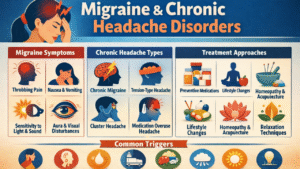
The following are typical migraine symptoms: • Severe, pounding headache
Light, sound, or smell sensitivity; nausea and vomiting; vertigo or dizziness; exhaustion and trouble focusing
Depending on the person, migraine attacks can happen infrequently or frequently and last anywhere from a few hours to many days.
________________________________________
An Overview of Chronic Headache Disorders
Headaches that occur on 15 or more days per month for at least three months are considered chronic headache disorders. These illnesses frequently need long-term care and can be quite incapacitating.
The following are the most prevalent kinds of persistent headache disorders:
1. Persistent migraines
When episodic migraine increases in frequency over time, chronic migraine develops. Most days of the month, people with chronic migraines have headaches, and many of those days also have migraine-like symptoms.
2. Headache of the Tension Type
The most common type of headache condition is tension-type headaches. They are sometimes compared to a tight band and are typically described as a dull, pressing, or tightening pain around the head. Common triggers include emotional tension, eye strain, stress, and bad posture.
- Headache in a cluster
Although less frequent, cluster headaches are incredibly severe. They happen in cycles or clusters, with attacks occurring every day for weeks or months, interspersed with intervals of remission. Usually severe, acute, and confined to one eye, the pain is sometimes accompanied by redness, tears, or congestion of the nose.
4. Overuse of Medication HeadacheContrary to popular belief, frequent usage of painkillers might result in persistent headaches. This illness emphasizes how crucial it is to receive the right care and medical advice.
________________________________________
Triggers and Causes
Although the precise origin of migraine and persistent headache diseases is unknown, evidence points to a mix of environmental, neurological, and hereditary variables. A number of factors, such as stress and emotional strain, can cause or exacerbate headaches.
Stress and mental strain; irregular sleep habits; and changes in hormones, particularly in women
• Dehydration or missing meals; • Some foods, like processed foods, cheese, chocolate, or caffeine
• Loud noises, bright lights, or strong odors
• Variations in the weather
In order to manage these disorders, it can be very helpful to identify personal triggers through observation or a headache journal.
________________________________________
Effects on Everyday Life
The quality of life can be significantly impacted by migraine and chronic headache diseases. Missed workdays, decreased productivity, social disengagement, anxiety, and depression can all result from frequent headaches. The unpredictable nature of attacks frequently contributes to emotional stress, which makes it challenging for victims to schedule everyday activities.
Additionally, chronic pain can interfere with sleep, impair focus, and have an impact on relationships with family and coworkers. Therefore, rather than being written off as “simple headaches,” these disorders should be acknowledged as serious health issues that call for all-encompassing care.
________________________________________
Diagnosis
Based on medical history and symptom patterns, migraine and chronic headache diseases are mainly diagnosed clinically. A medical expert may inquire in-depth about the frequency, length, location, intensity, and accompanying symptoms of headaches. To rule out other underlying illnesses, blood tests or imaging scans may be advised in certain situations.
________________________________________
Approaches to Management and Treatment
A mix of lifestyle changes and medication treatment is typically required for the effective management of migraine and chronic headache conditions.
Preventive and Lifestyle Actions
Maintaining regular meal and sleep routines; managing stress with yoga, meditation, or relaxation techniques; and drinking plenty of water
• Reducing exposure to recognized triggers
• Frequent, moderate physical activity
Medical Administration
Preventive therapy to lessen the frequency and intensity of attacks as well as acute drugs to ease pain during an attack are possible forms of treatment. The type of headache, its intensity, and each person’s reaction all influence the therapy option.
Holistic and Complementary Methods
For long-term comfort and general balance, many people investigate supplementary medical systems. Individualized treatment is the focus of methods like homeopathy, acupuncture, and nutritional therapy, which address the patient’s overall health and underlying susceptibility in addition to the pain.
Managing Headache Disorders
Even though chronic headache disorders and migraines can be difficult, they can be controlled with the correct strategy. The burden of these disorders can be considerably lessened with education, early intervention, and a customized treatment plan. Improving control requires regular self-care and open contact with healthcare providers.
________________________________________
In conclusion
Chronic headache problems and migraines are intricate neurological illnesses that go well beyond sporadic headaches. They can have a significant effect on one’s social, emotional, and physical health. People can reclaim control over their lives by comprehending their nature, identifying triggers, and implementing an all-encompassing management strategy. It is possible to lessen the frequency and severity of headaches and make progress toward a healthier, more balanced existence with the right attention, tolerance, and awareness.